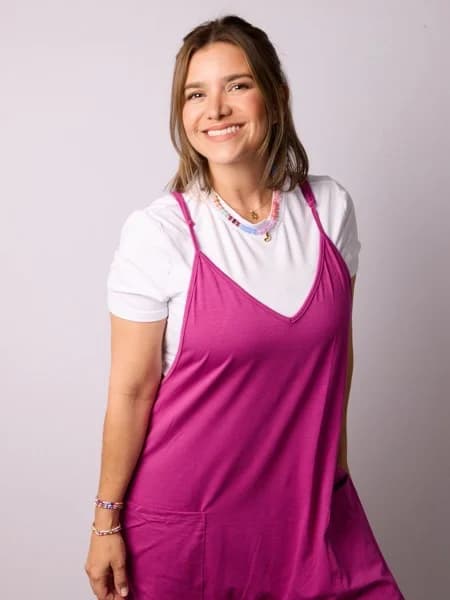
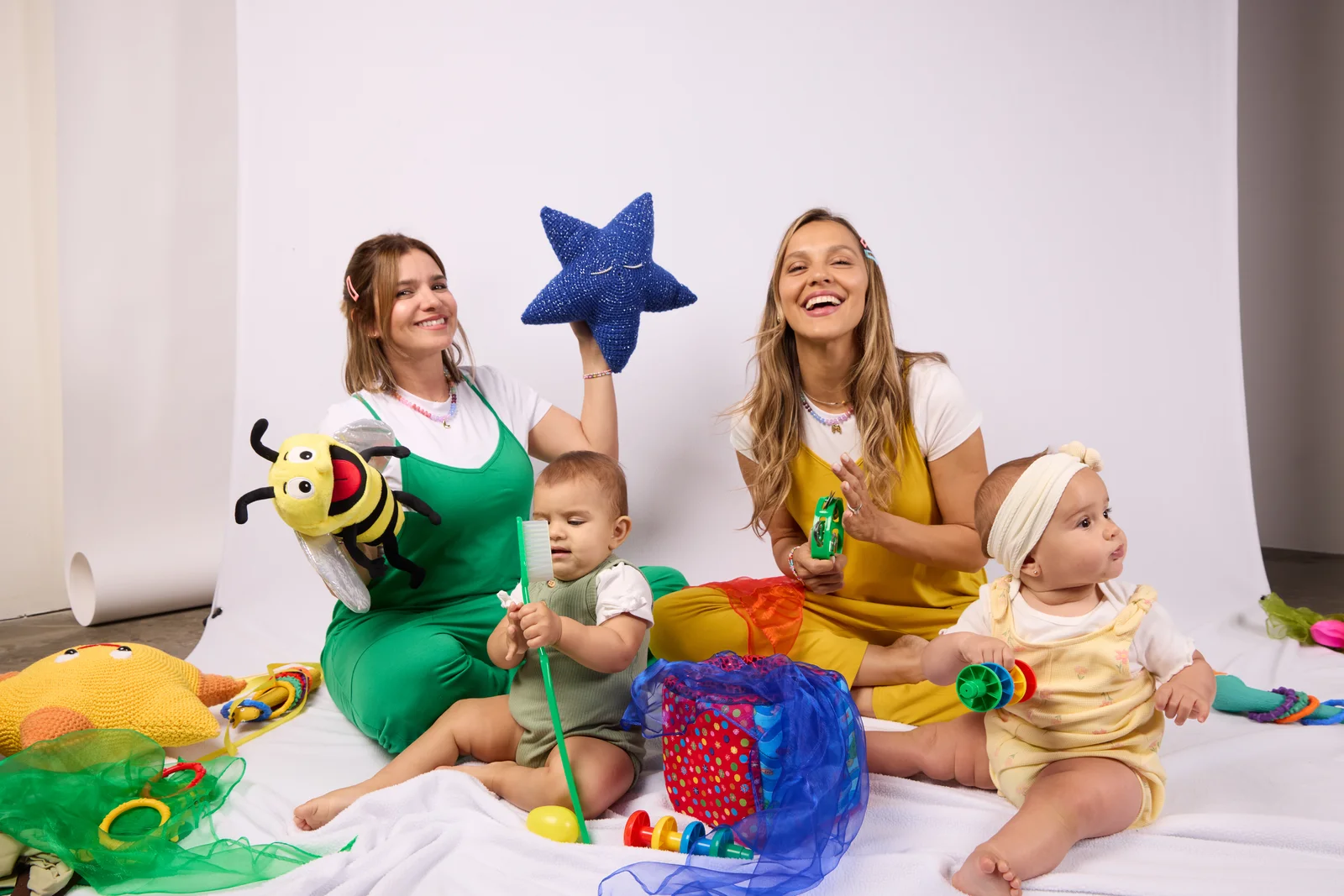
At My Tribu, the forty-five minutes of class are screen-free. Not to show a video, not to teach a song, not to entertain a baby. It is a choice we made with a lot of love, and here is why.
It is not an anti-screen stance, it is a choice in favor of something else, human connection, real materials in three dimensions, live music, the midday breeze on the face. When your baby comes to class, we want them fully present with you and with their environment. That is what early development needs.
What pediatricians recommend
The American Academy of Pediatrics recommends avoiding screens for babies under eighteen months, with the only exception being video calls with family. Between eighteen and twenty-four months, they recommend introducing only high-quality programming and always with an adult watching alongside the child. After two years old, they suggest limiting screens to a maximum of one hour a day.
This does not come from a place of fear. It comes from how a young brain learns. In the first two years, your baby's brain builds its basic neural connections from human interaction. A screen can show a lot, but it does not respond. Without response, a big part of learning does not happen.
A screen shows. A mom responds. The difference is everything.
If you want to read the full AAP guidance, it is available on their official site.
What we use instead of screens
Instead of a video with music, we bring live music. Mari plays several instruments throughout the program, and she has put together songs that are unique to this community. A person singing can shift the rhythm based on what is happening with the babies in that moment. If they are restless, slow it down. If they are dozing, pick it up. A screen cannot do that. (If you're curious, Mari wrote about the Spanish nursery rhymes we sing in class and at home.)
Instead of a moving image, we offer real objects your baby can grab, smell, chew on. The texture, weight, temperature, sound of the object, give them information no video can.
Instead of a story narrated by an animated character, we read a short book in Spanish and English with a human voice, gestures, and pauses that respond to the baby's attention. Human narration activates different brain areas than recorded narration.
What a baby can do without a screen
Babies have longer attention spans than we think. The idea that they need constant stimulation often comes from the marketing of toys that light up, vibrate, and talk. In practice, a well-accompanied baby can spend several minutes focused on a single texture, on a leaf moving in the wind, on their own hand opening and closing.
In the format we designed, that is exactly what we expect. A baby finds a soft fabric and stays with it, observing it, handling it, bringing it to the mouth, for longer than many adults can sustain attention on a task. That is the deep learning early development needs.
A baby present with you for forty-five minutes is worth more than a baby entertained for five hours.
How to talk about this with family
Sometimes a mom tells us her partner, in-laws, or mom asks why her baby does not watch the videos other babies watch. You do not have to convince anyone. What works is borrowing the pediatrician's language, "our pediatrician recommended zero screens until eighteen months, so we are following that, then we will introduce slowly and always with an adult alongside".
People respect what a pediatrician says even when they question moms' decisions. Use it.
If you want to see how it works in practice
Your first class is free. Come see what forty-five minutes screen-free looks like, with babies exploring outdoors, with moms singing, with materials chosen with love. We will see you at Doral Yard.